


.png)
.png)


I was in Boston for UNBOUND, and the volume of announcements was genuinely hard to keep up with. Over a hundred updates across the platform. But the marketing ones pointed in a single direction, and it's worth pausing on before everyone rushes to switch things on.
Content Agent, Campaign Agent, Nurture Agent, Marketing Studio: HubSpot has made it dramatically easier to produce content at volume. Which means the bottleneck has moved. It is no longer how fast you can write. It's whether what gets written is worth publishing under your name.
And that depends almost entirely on what you feed the agent before it starts.
The through-line of the whole event
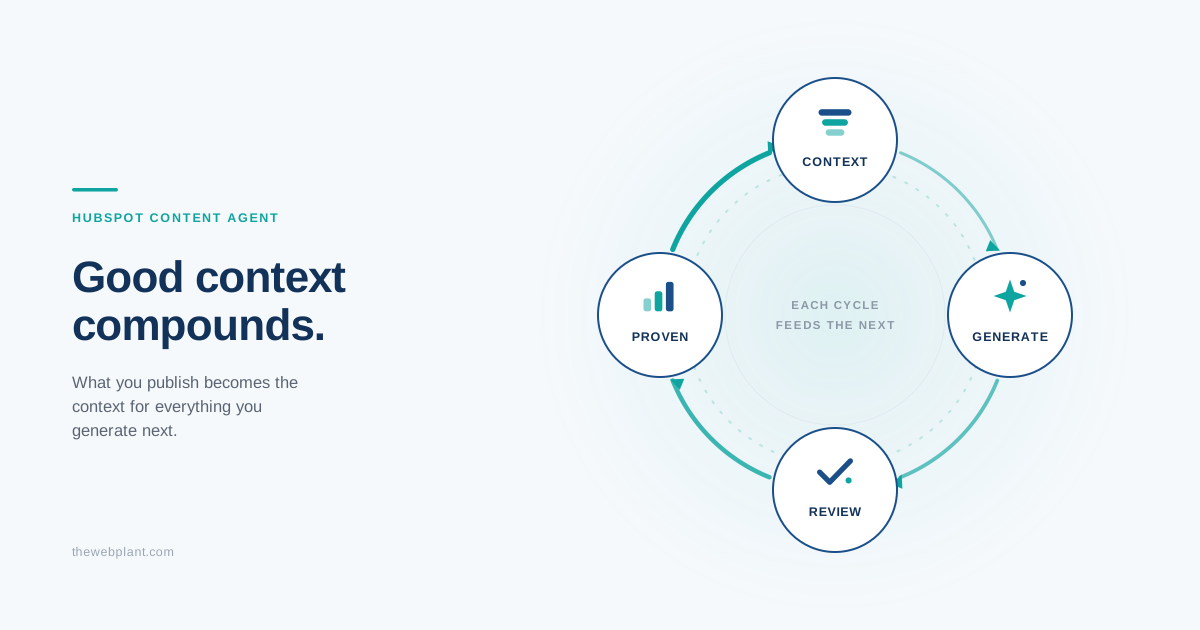
If you strip out the individual features, the message running through UNBOUND was about context. Not model quality, not speed but CONTEXT. Agents that draw on shared, accurate, well-governed information about your business, rather than agents that generate plausible text from nothing in particular.
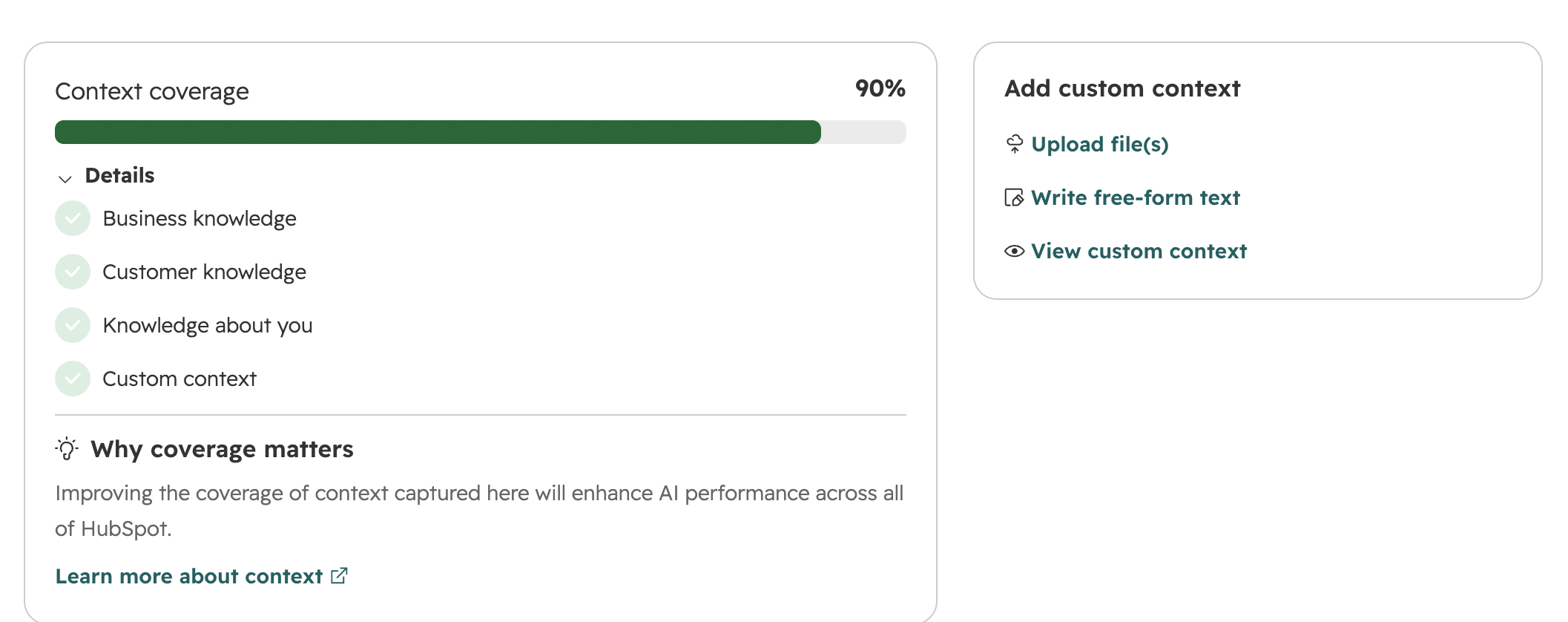
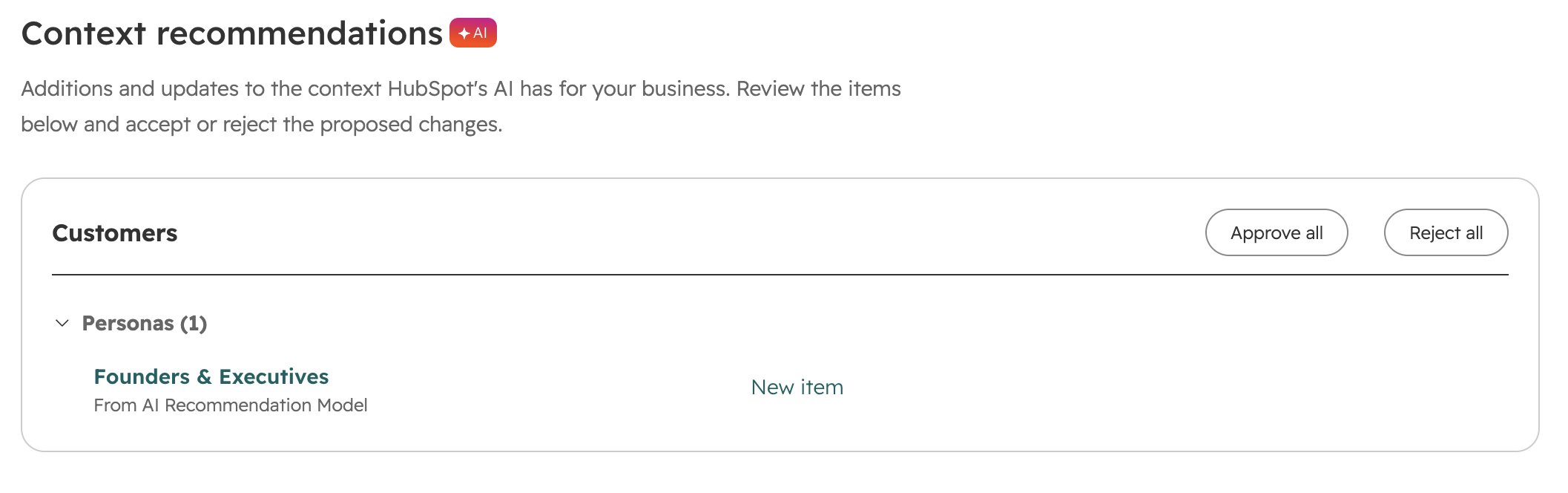
HubSpot even shipped a piece of product specifically for this: Context Home, a central place to see and manage what HubSpot knows about your business and what your agents can draw on. That's a governance tool, not a content tool. Its existence tells you what HubSpot thinks the real problem is.
The interesting part among the updates wasn't the agents. It was everything HubSpot built around them to make sure they don't embarrass you.
|
AI without the right context is worse than no AI. — Yamini Rangan, CEO, HubSpot |
That's a sharper claim than it first appears. Not "less useful" but “Worse”. Because content produced without context still gets published, still carries your logo, and still shapes what buyers and AI engines think your company is. Bad context doesn't produce nothing — it produces confident, fluent, on-brand-looking material that's subtly wrong about who you are.
Three tiers of output, and you can tell them apart instantly
Here's the honest hierarchy of what comes out of these tools:
|
What goes in |
What comes out |
How it reads |
|---|---|---|
|
A prompt and nothing else |
Generic content about your category |
Obviously generated. Reads like every other post on the topic. |
|
Deep context — brand voice, customers, case studies, real data |
Content that reflects what your company actually knows |
Reads well. Specific. Could plausibly have been written in-house. |
|
Deep context, then edited by someone who was in the room |
Content carrying real expertise and judgement |
Reads best. The details only you have. |
It’s a very quick & easy tendency to sit in tier one and wonder why their output isn't performing. The gap between tier one and tier two isn't a better prompt but the material that is loaded before prompting.
The gap between tier two and tier three is a human who adds the thing that was never in the context to begin with: the client who pushed back, the approach that failed, the number that surprised you.
An agent can write around your organization’s expertise. It cannot manufacture the live experiences you have gained over the years.
So, what to load before you let it write
Concretely, before you put Content Agent to work on anything you intend to publish:
- Your brand kit. Logo, colours, typography, imagery rules. This is the easy one and most teams already have it. Check to make sure that it is current and accurate.
- Your brand voice. Not generic adjectives like "friendly, professional." Feed it three to five pieces of your best existing writing that represent your voice and expertise.
- Your customer detail. Who you sell to, what they care about, what language they use, what objections come up. If this lives only in your team's heads, that's the gap to close first. This is exactly what your content agent should be aware of.
- Your case studies. This is the highest-leverage upload and the one most often skipped. Case studies are where your specific, provable, differentiated outcomes live. An agent with access to them writes about results you've actually delivered rather than benefits anyone could claim.
- Your product and service truth. What you do, what you don't do, what's included, what isn't. It stops the agent promising things you don't sell.
- Your best-performing content. Both as a voice signal and as a structural one. It shows the agent what has actually worked with your audience.
The pattern is simple: everything that makes your content distinctive is something that already exists inside your business. The work is making it available, not creating it.
Guardrails: the other half of context
Context tells the agent what's true. Guardrails tell it what's allowed.
Claims and numbers
Decide what the agent may assert. Performance figures, client results, market statistics, comparative claims. These should come from a defined, approved source or not appear at all. An agent that invents a plausible-sounding statistic has created a problem that outlives the blog post.
Named clients and confidentiality
If you work under NDA, and if you do any white-label or enterprise work, you do, make the boundaries explicit. Which clients can be named, which must stay anonymous, which engagements can't be referenced at all. This is the failure mode with actual contractual consequences.
Topic boundaries
Some subjects your company should speak on with authority. Others you should stay away from because you don't have standing, or because they're commercially sensitive, or because a competitor relationship makes it awkward. Write the list down.
Tone limits
Brand voice covers how you sound when things go well. Guardrails should also cover how you sound when they don't: how you discuss competitors, how you handle criticism, what level of confidence you're comfortable projecting on things you can't prove.
Approval routing
Decide before you scale, not after: who reviews agent-generated content, what triggers a deeper review, and who signs off on anything making a claim about a client or a result. The moment output volume goes up, an undefined approval process quietly becomes no approval process.
A pre-flight checklist
Work through this before the agent produces anything you intend to publish:
|
☐ |
Brand kit uploaded and confirmed current |
|
☐ |
Brand voice trained on 3-5 strong examples of your actual writing |
|
☐ |
Customer and ICP detail documented and loaded |
|
☐ |
Case studies uploaded. All of them, not just the newest |
|
☐ |
Product and service scope documented, including what you don't offer |
|
☐ |
Approved-claims list defined (what figures the agent may state, and from where) |
|
☐ |
NDA and confidentiality boundaries written down explicitly |
|
☐ |
Off-limits topic list agreed |
|
☐ |
Competitor-mention policy defined |
|
☐ |
Named reviewer for agent-generated content |
|
☐ |
Escalation rule for anything referencing a client or a result |
The AEO angle
AI answer engines build their picture of your company from what's written about you — your content included. If you scale output using thin context, you're not just publishing mediocre posts. You're feeding a large volume of vague, undifferentiated material into the same sources ChatGPT, Gemini and Perplexity draw on when someone asks about your category.
Content built on real context does the opposite. Specific claims, real outcomes, consistent positioning, actual expertise — that's exactly the material answer engines cite. The context work you do for the Content Agent is the same work that improves your AI visibility. One investment, two returns.
If you haven't looked at how AI engines currently describe your brand, that's worth doing before you scale content production, not after.
Start bounded
The temptation after an update like this is to go back and switch everything on. Resist it for a fortnight.
Pick one content type e.g. one blog series, one email sequence, one set of landing pages. Load the context properly. Set the guardrails. Produce a handful of pieces, review them closely, and note specifically where the output fell short. Almost every gap will point back to context you didn't load or a rule you didn't write down.
Fix those, then scale. It's a slower start and a much faster finish than switching on everything and spending three months wondering why the content isn't landing.
Have a Project in Mind?
Let’s talk about what you need and how we can make it happen.

Leave a reply