


.png)
.png)


Introduction
Running marketing campaigns across multiple channels can feel overwhelming. Between emails, ads, landing pages, and social posts, keeping everything connected — and proving ROI — is a constant challenge for growing businesses.
That’s where HubSpot’s Campaigns Tool comes in. It’s designed to bring all your marketing efforts into one place, giving you visibility, consistency, and the insights you need to scale.
In this blog, we’ll explore how to use HubSpot’s Campaigns Tool to run end-to-end marketing campaigns — from planning and execution to measurement and optimization.
Why Use the Campaigns Tool?
Without a centralized campaign hub, marketers struggle with:
- Fragmented Data – Results spread across tools with no clear big picture.
- Inconsistent Messaging – Assets that don’t align or tell a unified story.
- Manual Reporting – Hours wasted stitching together campaign metrics.
- Unclear ROI – Difficulty proving which campaigns drive actual revenue.
HubSpot solves this by letting you plan, execute, and measure every piece of a campaign within the platform.

Key Features of HubSpot’s Campaigns Tool
Here’s what makes it a game-changer for marketing teams:

Centralized Campaign Management
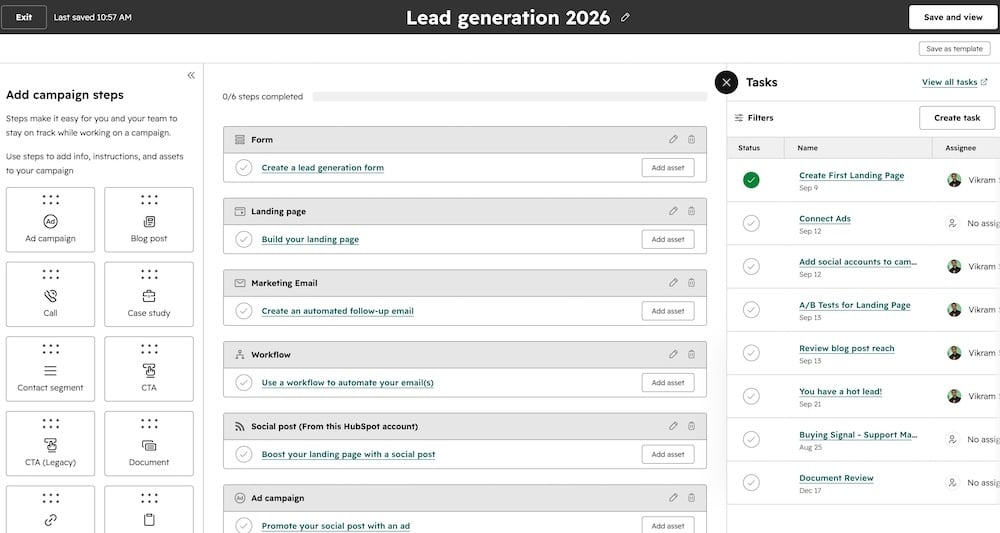
All assets — landing pages, emails, ads, CTAs, and workflows — are grouped under one campaign for easy tracking.
Cross-Channel Tracking
Measure performance across email, social media, paid ads, and website traffic in one dashboard

Collaboration Tools
Assign tasks, add notes, and keep your team aligned inside HubSpot.

ROI Attribution
Directly connect campaign results to deals, pipeline, and revenue.

Custom Reporting
Create tailored dashboards to show stakeholders the metrics that matter most.

Integration with CRM
Tie campaigns directly to leads and customer journeys for a complete view of impact.
Benefits for Marketing Teams
By using HubSpot’s Campaigns Tool, teams experience:
- Efficiency: No more jumping between tools or spreadsheets.
- Clarity: A single view of campaign impact across all channels.
- Scalability: Templates and workflows to reuse for future campaigns.
- Alignment: Sales and marketing teams working with the same data.
Final Thoughts
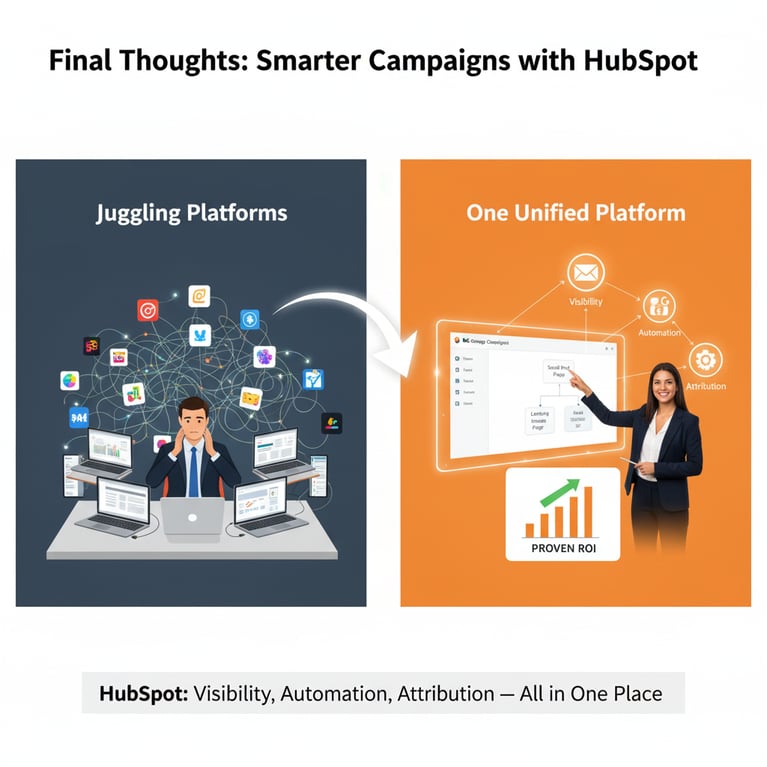
The HubSpot Campaigns Tool isn’t just about organizing assets — it’s about running smarter campaigns with measurable results. Instead of juggling platforms, you can manage everything in one place and prove the ROI of your efforts.
In 2025, marketers need more than execution. They need visibility, automation, and attribution — and HubSpot delivers all three.
You might also like
HubSpot for Agencies: How to Manage Clients, Campaigns & Results in One Place
Introduction Running an agency means juggling a lot at once—clients, complex campaigns, detailed reporting, tight deadlines, and delivering measurable results. Every day, agency leaders and their teams face constant demands to keep multiple projects...
HubSpot for Healthcare: How Clinics & Wellness Brands Streamline Marketing
Introduction The healthcare and wellness industry is transforming. Patients today don’t just walk into the nearest clinic or sign up for the first yoga class they find. They research online, compare options, and expect a seamless digital experience...
How to Personalize Email Campaigns in HubSpot
Introduction Email marketing is still one of the highest ROI channels available — but only when it’s relevant.
Have a Project in Mind?
Let’s talk about what you need and how we can make it happen.
